

Secure Code Review

Security, line by line

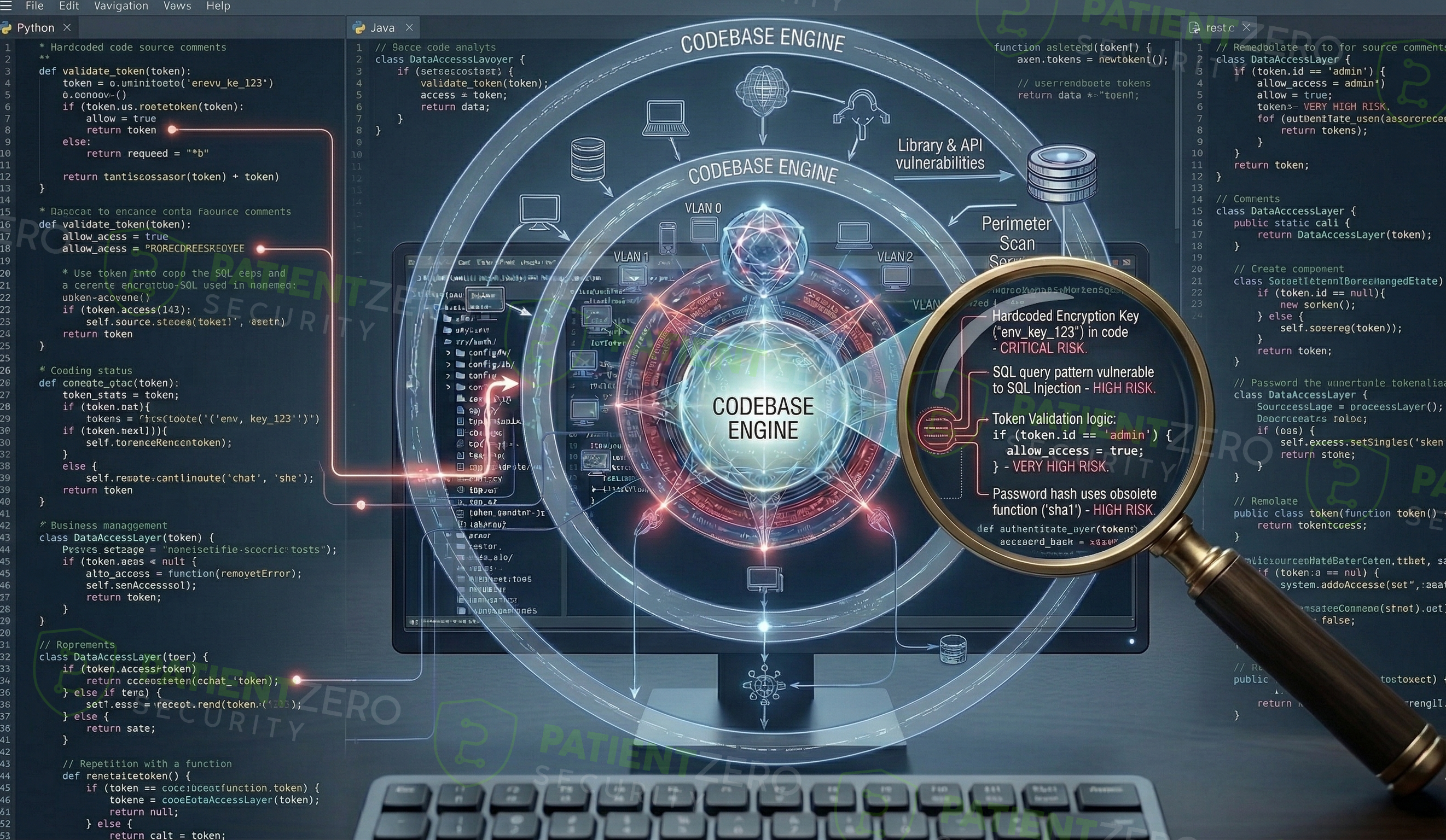
Secure Code Review evaluates application source code to identify security weaknesses in authentication, authorization, input validation, cryptography, and sensitive business logic.
OWASP ASVS
|Static Analysis|Logic Flaws
Source Code Review Dashboard
Service description

What Source Code Review covers

Detect vulnerabilities early in the development lifecycle.

Secure Code Review evaluates application source code to identify security weaknesses in authentication, authorization, input validation, cryptography, and sensitive business logic. The review helps organizations detect vulnerabilities early in the development lifecycle, reducing the risk of exploitation in production environments.

The assessment follows OWASP Secure Coding Practices to evaluate how securely code is written and structured, while leveraging OWASP Top 10, OWASP ASVS, and CWE Top 25 for coverage and risk classification. The review combines automated static analysis to identify common insecure patterns with manual code review to uncover logic flaws, insecure design decisions, and implementation weaknesses that automated tools alone cannot detect.

Where applicable, and when a supporting test environment is provided, identified issues may be validated through controlled exploitation to demonstrate real-world impact, following a white-box testing approach without performing a full penetration test.

Flowchart

Our source code review process

A systematic approach from understanding the codebase to actionable remediation guidance.

Engagement stages
From scope definition to structured reporting and remediation support.
Step 01
Scope Definition & Codebase Familiarization
Understanding the application architecture, technologies, and trust boundaries while defining which repositories, modules, and components are in scope for review.
Step 02
Automated Static Analysis
Running automated static analysis tools to identify baseline findings and insecure coding patterns across the codebase quickly.
Step 03
Identification of High-Risk Components
Focusing on high-risk components such as authentication, authorization, input handling, and cryptographic routines that warrant deeper manual review.
Step 04
Manual Code Review
Performing targeted manual code review to uncover logic flaws, trust assumptions, and insecure design decisions that automated tools often miss.
Step 05
Validation Against OWASP Practices
Reviewing implementation details against OWASP Secure Coding Practices to ensure critical areas such as input validation and error handling follow secure-by-design guidance.
Step 06
Risk Classification & Impact Analysis
Mapping findings to OWASP Top 10 and CWE categories, and prioritizing them based on likelihood, exploitability, and potential business impact.
Step 07
Reporting & Remediation Guidance
Delivering a structured report with line-level findings, affected components, and clear remediation guidance, including secure coding and design recommendations.
Deliverables

What you take away

Clear, actionable intelligence to improve your application security posture.

Comprehensive Code Review reportDetailed documentation of identified vulnerabilities, affected components, and contextual information to support remediation.
Line-level vulnerability findings with contextPrecise code references and explanations so developers can quickly locate and understand each issue.
Mapping of findings to OWASP and CWE categoriesClassification aligned with OWASP Top 10, OWASP ASVS, and CWE Top 25 to support risk reporting and compliance.
Secure coding and design recommendationsActionable remediation guidance and, optionally, a walkthrough of findings with your engineering and security teams.

Ready to act on your code review findings?

Schedule a consultation to walk through the report, prioritize fixes, and plan secure coding improvements.