

Adversary Simulation

Security tested under real attack

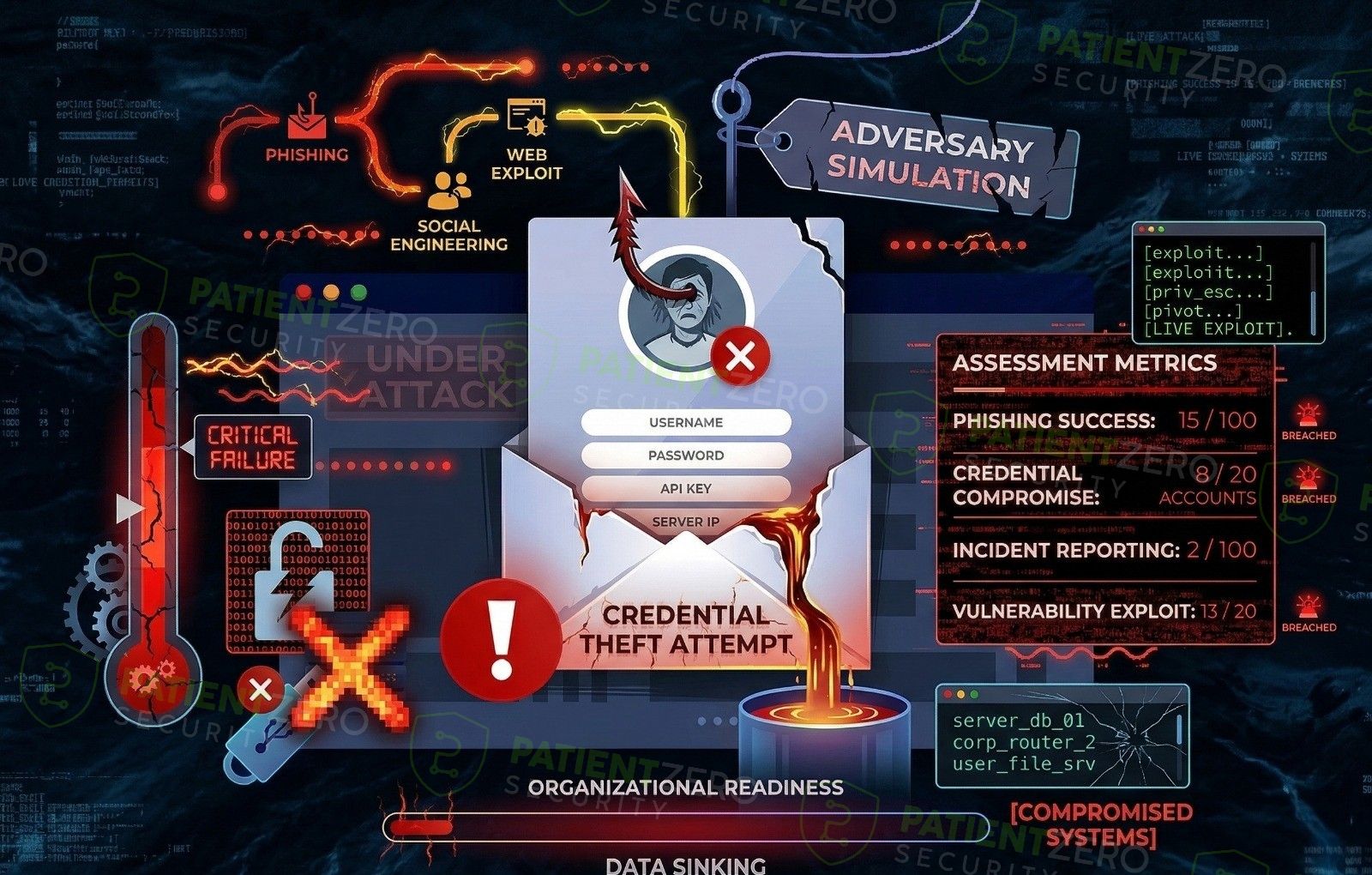
Adversary Simulation models realistic attacker behaviour using threat-informed tactics, techniques, and procedures to test how your organisation detects, responds to, and contains targeted attacks.
Threat-informed TTPs
|MITRE ATT&CK mapped|Detection & response focused
Adversary Simulation Dashboard
Service description

What Adversary Simulation covers

Threat-informed campaigns that evaluate how well your security programme performs under real attacker behaviour.

Adversary Simulation models realistic attacker behavior by simulating how attackers operate using known and commonly observed tactics, techniques, and procedures (TTPs). The engagement is threat-informed, meaning techniques are selected based on real-world attack patterns, industry trends, and relevance to your environment, rather than being tied to a single named threat actor.

The simulation follows the attacker's progression across the kill chain, including reconnaissance, initial access, execution, privilege escalation, lateral movement, and objective-driven activity. All simulated actions are mapped to the MITRE ATT&CK framework, giving clear visibility into which techniques are exercised and how effectively they are detected and responded to by existing controls.

The primary goal is to evaluate security effectiveness across people, process, and technology by observing how users, responders, and tooling perform during realistic attack scenarios, and where detection, response, and escalation processes break down.

Flowchart

How an adversary simulation engagement runs

From threat-informed planning through to post-engagement lessons learned.

Engagement stages
Structured attacker emulation across the full kill chain.
Step 01
Reconnaissance
Profiling your organisation, assets, and technology stack to identify realistic entry points and high-value targets for the simulation.
Step 02
Initial Access
Simulating initial compromise using agreed attack vectors such as phishing, credential abuse, or exposed services, within defined rules of engagement.
Step 03
Execution & Privilege Escalation
Executing payloads and techniques to establish footholds and escalate privileges while observing which activities are detected or blocked.
Step 04
Lateral Movement
Moving between systems and segments to reach higher-value assets, testing segmentation controls and monitoring coverage along the way.
Step 05
C2 Simulation & Persistence
Emulating command-and-control channels and persistence mechanisms to understand how ongoing attacker presence is surfaced and contained.
Step 06
Actions on Objectives
Pursuing agreed objectives such as data access, domain control, or business disruption to demonstrate realistic impact pathways.
Step 07
People, Process & Technology
Reviewing how security teams, processes, and tooling performed, capturing detection gaps and response breakdowns across the engagement.
Deliverables

What you take away

Insight into how real attackers would operate and how your defences actually perform.

Adversary Simulation ReportA comprehensive report including executive summary, engagement objectives, detailed attack narrative, and mapped techniques across the kill chain.
Attack Timeline & MITRE ATT&CK MappingA step-by-step timeline of simulated activity with each technique mapped to relevant MITRE ATT&CK tactics for traceability and defence tuning.
Detection & Response Effectiveness AnalysisAssessment of alert coverage, visibility gaps, escalation paths, and containment actions across people, process, and technology.
Post-Engagement Debrief & RecommendationsA collaborative walkthrough session and risk-ranked improvement plan to strengthen detection, response, and resilience.

Ready to run an adversary simulation in your environment?

Schedule a consultation to define objectives, agree rules of engagement, and plan a threat-informed simulation tailored to your organisation.